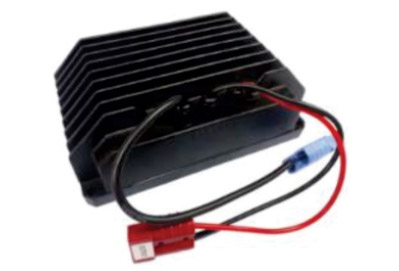
- Power - 650W
- Input Voltages - 24/36/48/72V
- Output Voltages - 12/24V
- Size - 235*160* 83mm
- Weight - 3.8Kgs
- Equivalent to Ip67
Manufacturers, Suppliers and Exporters of an extensive range of Electronic Products
The Role of DC-DC Converters in Driving the Future of Electric Vehicles
As electric vehicles (EVs) become more prevalent, the need for efficient and reliable power management systems is critical. These systems typically include battery management systems, various control units, and one of the most essential components — the DC-DC converter for EVs. This converter plays a vital role in regulating and distributing power at various voltage levels, ensuring the smooth functioning of all electrical systems in an EV.
DC-DC Converter and Its Use in Electric Vehicles
Electric vehicles operate using high-voltage battery packs, usually ranging from 200V to 800V, depending on the vehicle design and energy requirements. While these high-voltage batteries power the motor, many auxiliary systems — like infotainment, lighting, climate control, and sensors — operate at much lower voltages, such as 12V or 24V.
This discrepancy is where the DC-DC converter comes in. It efficiently steps down the voltage from the high-voltage battery to the appropriate levels needed by these auxiliary systems.
Operating Functions of DC-DC Converters in EVs
Voltage Regulation
One of the primary roles of a DC-DC converter for EVs is voltage regulation. It ensures all vehicle systems receive consistent voltage, preventing overloads and protecting sensitive electronic components.
Energy Efficiency
Efficiency is vital in electric vehicles. High-efficiency DC-DC converters reduce energy loss during voltage conversion. With some converters achieving up to 90% efficiency, more battery power is utilized for actual vehicle performance.
Battery Management
DC-DC converters play an essential role in regenerative braking, where energy from braking is converted and stored back into the battery. The converter ensures this energy is transferred safely and at the correct voltage, extending battery life and enhancing performance.
Electrical Isolation for Safety
High-voltage systems pose safety risks. DC-DC converters provide electrical isolation between high- and low-voltage components, reducing risks like electrical shorts or shocks and enhancing passenger safety.
Support for Auxiliary Systems
Modern EVs have numerous auxiliary loads. The DC-DC converter ensures these systems — including entertainment, navigation, and climate control — receive stable power, improving overall vehicle functionality and user experience.
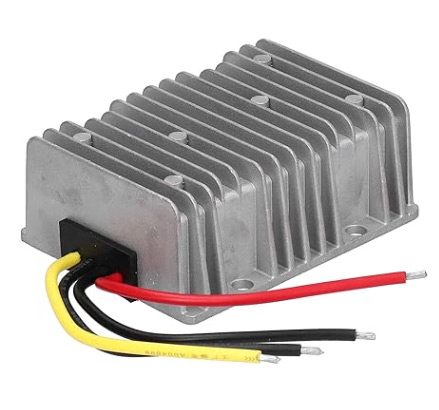
Advantages of DC-DC Converters in EV Applications
Increased Driving Range
By minimizing energy losses, DC-DC converters help extend the vehicle's driving range — a major advantage in EV design.
Enhanced Performance
Stable power supply means consistent performance across all electric systems, from acceleration and braking to infotainment.
Cost Savings
Efficient power conversion translates to lower energy consumption, reducing operating costs for both manufacturers and consumers.
Reduced Environmental Impact
Improved energy efficiency leads to reduced energy consumption, less waste, and a lighter load on power generation systems, aligning with global goals for cleaner energy.
What is a DC-DC Converter in an Electric Vehicle?
A DC-DC converter in an EV is an electronic device that converts direct current (DC) electricity from one voltage level to another. This conversion is crucial for matching the voltage needs of various vehicle systems.
How It Works
A DC-DC converter uses switching elements, inductors, capacitors, and control circuitry to regulate output voltage. By rapidly switching power on and off and smoothing the resulting signal, the converter efficiently adjusts voltage levels with minimal energy loss.
Common Types of DC-DC Converters in EVs:
-
Buck Converters – Step down voltage (e.g., from 400V to 12V).
-
Boost Converters – Step up voltage for systems that require more than the battery provides.
-
Buck-Boost Converters – Can both increase and decrease voltage, useful in dynamic systems.
Typical Use Cases
DC-DC converters are used in power supplies for consumer electronics, industrial automation, renewable energy systems, and, critically, in electric mobility applications where different voltages must coexist efficiently.
Isolated DC-DC Converters: What Are They?
An isolated DC-DC converter is a type of power converter that transfers energy between two circuits without a direct electrical connection, using transformers or other isolating methods. This isolation breaks ground loops and reduces noise, which is essential in sensitive or safety-critical systems.
Common Applications of Isolated DC-DC Converters:
-
Power Supplies for electronics
-
Telecommunications for noise-free power distribution
-
Renewable Energy Systems for solar and wind integration
-
Electric Vehicles for safe voltage conversion across vehicle systems
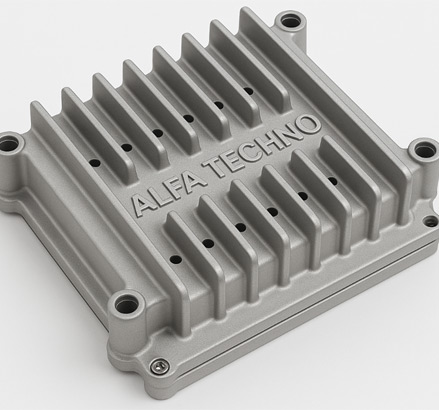
Functions of Isolated DC-DC Converters
-
Voltage Regulation – Keeps output voltage constant despite input or load variations.
-
Power Management – Efficient voltage conversion for battery-powered devices.
-
Electrical Isolation – Enhances safety by separating high- and low-voltage sections.
-
Efficiency – Reduces energy loss, extending battery life and lowering costs.
Types of Isolated DC-DC Converters
-
Flyback Converters – Ideal for low-to-medium power applications.
-
Forward Converters – Offer better efficiency for higher output current demands.
-
Push-Pull Converters – Provide high output power using a center-tapped transformer.
-
Half-Bridge & Full-Bridge Converters – Used for high power and efficiency in EVs and renewable systems.
Advantages of Isolated DC-DC Converters
-
Electrical Isolation – Protects sensitive components and users.
-
Noise Reduction – Minimizes electromagnetic interference (EMI).
-
Enhanced Safety – Critical for medical, industrial, and EV applications.
-
Voltage Flexibility – Multiple output voltages from a single input.
-
Improved Efficiency – Less energy lost during conversion.
DC-DC in EV/HEV Systems — Role in Modern Vehicles
In modern Electric Vehicles (EVs) and Hybrid Electric Vehicles (HEVs), DC-DC converters are crucial components of the powertrain and auxiliary power systems.
Primary Function in EVs
Electric vehicles typically have a high-voltage traction battery (often 200 V–800 V) and a low-voltage electrical system (commonly 12 V or 48 V). The DC-DC converter steps down the high-voltage DC from the battery to lower voltages to power headlights, infotainment, safety systems, and control electronics — effectively replacing the alternator used in traditional internal combustion engine vehicles.
Operational Importance
- Ensures stable low-voltage power for vehicle electronics even when traction battery levels vary.
- Supports multiple system voltages depending on vehicle architecture (HV to 12 V, HV to 48 V, etc.).
- Enhances energy efficiency and reduces reliance on mechanical components like alternators.
Product Range & Specifications
Below is an example representation of typical DC-DC converter product offerings based on industry norms (this should be tailored with actual Alfatechno product data):
| Model |
Input Voltage |
Output Voltage |
Power Rating |
Efficiency |
AT-DC100 |
48 V |
12 V |
100 W |
92 % |
AT-DC250 |
200–450 V |
12 V |
250 W |
94 % |
AT-HVDC500 |
400 V |
48 V |
500 W |
95 % |
AT-HVDC1000 |
800 V |
12 V |
1000 W |
96 % |
Standards & Reliability — Automotive & Industrial Compliance
For use in automotive and industrial environments, DC-DC converters must meet strict quality and safety requirements:
Automotive Industry Requirements
- AEC-Q Certification: Ensures the converter meets automotive stress and quality tests.
- ISO 26262 Functional Safety: Addresses the lifecycle safety of automotive electrical systems, including DC-DC converters in safety-critical roles.
- ISO 16949 & ISO 16750: Standards covering quality systems and environmental stress tests for vehicle electronics (thermal, vibration, electrical transients).
Industrial Standards
In industrial applications, ruggedness, thermal performance, EMI/EMC compliance, and insulation standards are also important to ensure long-term reliable operation across varied environments.
Comparison & Selection Guide — Helping Buyers Choose
Choosing the right DC-DC converter depends on several critical factors:
1. Voltage Requirements
- Input Voltage Range: Must match the source system (e.g., 400 V battery).
- Output Voltage & Current: Must satisfy the device load needs (12 V, 48 V, etc.).
2. Power & Efficiency
- Select a converter capable of handling required power without excessive heat.
- Higher efficiency (>90 %) reduces losses and improves reliability.
3. Isolation Needs
- Isolated Converters are essential for safety in high-voltage systems.
- Non-isolated Converters may be suitable where isolation isn’t required.
4. Environmental Conditions
- Verify operating temperature, vibration tolerance, and moisture resistance.
- Automotive environments may require –40 °C to +125 °C tolerance.
5. Compliance & Safety
- Confirm compliance with automotive and industrial safety and functional standards.
FAQ / Knowledge Base — DC-DC Converter Essentials
Q1: What is the primary purpose of a DC-DC converter?
A DC-DC converter converts DC power from one voltage level to another reliably and efficiently for different system requirements.
Q2: Can DC-DC converters increase voltage?
Yes — some topologies, like boost and buck-boost types, can step up as well as step down voltages.
Q3: Why are DC-DC converters essential in EVs?
In EVs and HEVs, they replace alternators and provide lower-voltage power to auxiliary systems from the high-voltage battery.
Q4: What efficiency should I expect?
High-quality DC-DC converters often achieve over 90 % efficiency, improving energy utilization and reducing heat.
Q5: Do automotive converters need special certification?
Yes — automotive DC-DC converters must meet standards such as AEC-Q and often ISO 26262 for safety and reliability.
Power Your EV Innovation with Alfa Techno
At Alfa Techno, we deliver high-performance DC-DC converters engineered for the next generation of electric mobility. Whether you're designing EVs, hybrid systems, or industrial applications, our advanced power solutions ensure efficiency, safety, and reliability.