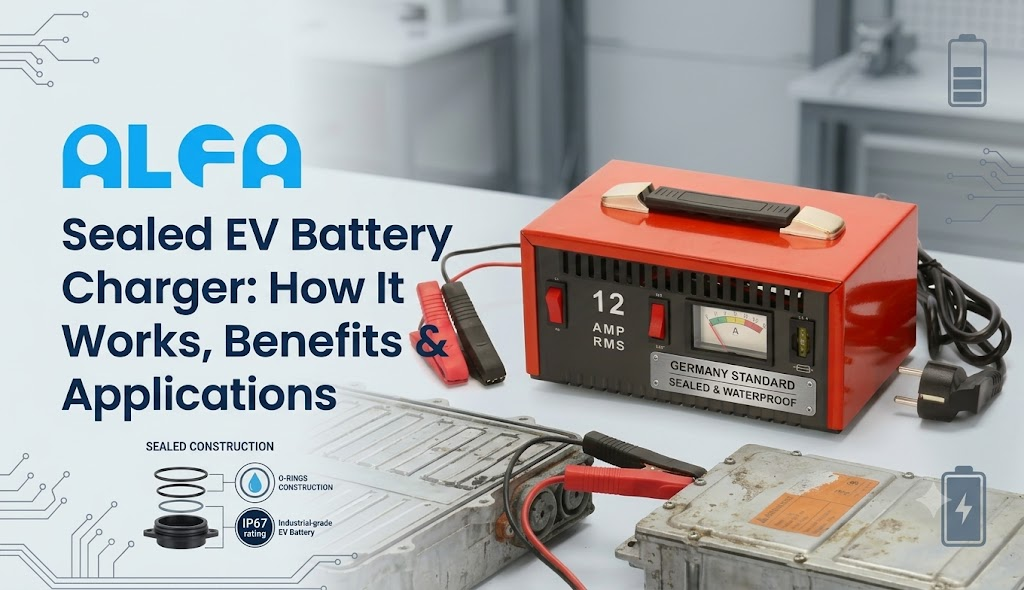
Sealed EV Battery Charger: How It Works, Benefits & Applications
Electric vehicles require safe, efficient, and reliable charging systems. A sealed EV battery charger is specifically designed to charge electric vehicle batteries while protecting internal components from dust, moisture, and environmental damage.
Modern sealed electric vehicle battery chargers provide stable charging performance, enhanced safety features, and long-term durability. These chargers are commonly used in electric scooters, electric bikes, EVs, industrial electric vehicles, and battery-powered equipment.
What Is a Sealed EV Battery Charger ?
A sealed EV battery charger is an enclosed battery charging system designed for electric vehicles. The sealed design protects internal electronic components from environmental factors such as :
- Dust
- Water
- Moisture
- Dirt
- Vibration
Because of this protection, sealed chargers are highly reliable and suitable for outdoor charging environments and industrial applications.
These chargers convert AC power from the electrical grid into controlled DC power that charges EV batteries safely.
How a Sealed EV Battery Charger Works ?
A sealed electric vehicle battery charger follows a controlled charging process to protect the battery and maximize charging efficiency.
Step 1: AC Power Input
The charger receives AC power from a power outlet or charging station.
Step 2: Power Conversion
Internal power electronics convert AC power into DC power suitable for charging the EV battery.
Step 3: Controlled Charging
The charger regulates voltage and current to match the battery's charging requirements.
Step 4: Battery Monitoring
Modern chargers monitor battery parameters such as voltage, temperature, and charging status.
Step 5: Charging Completion
Once the battery reaches full charge, the charger automatically stops or switches to maintenance mode.
This process ensures safe charging while protecting the battery from overcharging or overheating.
Key Features of Sealed EV Battery Chargers
A high-quality sealed EV battery charger includes several advanced features designed for safety and performance.
Waterproof and Dustproof Design
The sealed housing protects internal components from environmental exposure.
High Charging Efficiency
Modern chargers deliver efficient power conversion with minimal energy loss.
Overcharge Protection
Smart circuitry prevents battery overcharging and extends battery life.
Thermal Protection
Temperature sensors prevent overheating during the charging process.
Compact and Durable Design
Sealed chargers are designed to withstand harsh operating conditions.
Benefits of Using a Sealed EV Battery Charger
Using a reliable sealed electric vehicle charger offers multiple advantages.
Enhanced Safety
Sealed enclosures prevent exposure to electrical components and environmental damage.
Longer Charger Lifespan
Protection from dust and moisture increases the durability of the charger.
Reliable Charging Performance
Stable voltage and current ensure consistent battery charging.
Ideal for Outdoor Applications
Sealed chargers are suitable for outdoor installations and harsh environments.
Reduced Maintenance
The sealed design minimizes maintenance requirements.
Applications of Sealed EV Battery Chargers
Sealed EV battery chargers are widely used in various electric mobility and industrial applications.
Electric Scooters and Electric Bikes
Compact sealed chargers are ideal for charging small EV batteries.
Electric Cars and Utility Vehicles
Reliable charging systems are essential for EV battery maintenance.
Industrial Electric Vehicles
Forklifts and warehouse vehicles require durable sealed charging systems.
Renewable Energy Systems
Sealed chargers can also support battery charging in solar or hybrid power systems.
Outdoor Charging Infrastructure
Weather-resistant chargers are essential for public EV charging installations.
How to Choose the Right Sealed EV Battery Charger
When selecting a sealed EV battery charger, several important factors should be considered.
Battery Compatibility
Ensure the charger supports the battery type and voltage used in the EV.
Charging Capacity
Choose a charger with appropriate current output for the battery size.
Safety Features
Look for chargers with overvoltage, overcurrent, and temperature protection.
Environmental Protection Rating
IP-rated sealed chargers provide protection against dust and water.
Efficiency and Performance
High-efficiency chargers reduce energy loss and improve charging speed.
Future of EV Battery Charging Technology
The rapid growth of electric mobility is driving innovation in EV battery charging systems.
Key developments include :
- Smart charging systems with AI-based battery management
- Fast charging technology
- Wireless EV charging solutions
- Integration with renewable energy systems
- IoT-enabled battery monitoring
These technologies will improve charging efficiency and support the global adoption of electric vehicles.
Frequently Asked Questions (FAQ)
Q1. What is a sealed EV battery charger ?
A sealed EV battery charger is a protected charging device designed for electric vehicle batteries. Its sealed enclosure prevents dust, moisture, and environmental damage while providing safe battery charging.
Q2. Why are sealed battery chargers used in electric vehicles ?
Sealed chargers protect internal electronics from dust, water, and vibration, making them more reliable for outdoor and industrial applications.
Q3. Can sealed EV battery chargers be used outdoors ?
Yes. Most sealed EV chargers are designed with protective enclosures that allow safe operation in outdoor environments.
Q4. Do sealed chargers improve battery life ?
Yes. Smart charging control prevents overcharging and overheating, which helps extend the lifespan of EV batteries.
Q5. What vehicles use sealed EV battery chargers ?
Sealed chargers are commonly used in electric scooters, electric bikes, electric cars, industrial EVs, and battery-powered equipment.